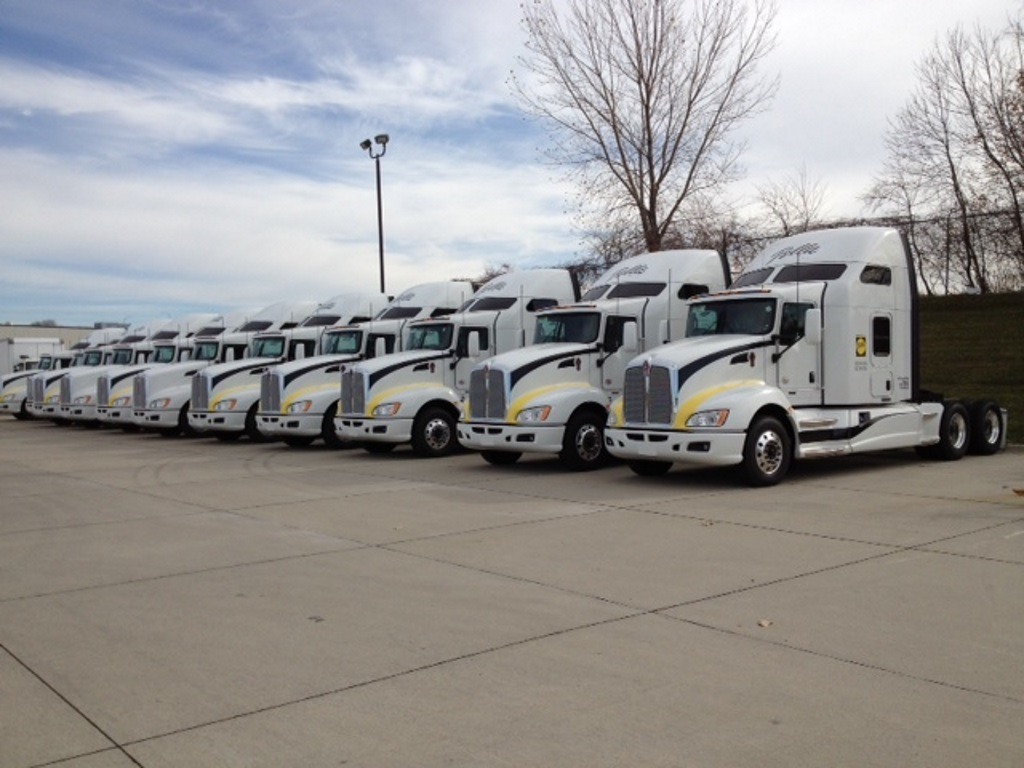
Recently, a few members of our team were standing out by the warehouse, watching trucks bump the docks and wait in the yard. Within just a few minutes, we realized something interesting: without even looking at the logos on the doors or checking the DOT numbers, we could tell exactly who was an owner-operator and who was a company driver.
The tell wasn’t the truck model or the paint job. It was the engine noise.
The owner-operators backed into the dock, set the brakes, and immediately shut the engine off. The company drivers? They left the trucks rumbling while they waited for their paperwork.
The psychology behind it is simple. When the diesel bill comes directly out of your own pocket, you turn the key off. When it’s going on a company fleet card, it’s easy to leave the engine running for the AC, the heater, or just out of habit. Most drivers aren’t doing this maliciously; it’s simply a blind spot when they don’t see the pump receipt.
For fleet managers however, that blind spot carries a massive price tag.
The Hard Math of Sitting Still
With the national average for diesel currently hovering around $4.78 per gallon (on the day of writing), the financial drain of unnecessary idling adds up faster than most fleets realize.
The benchmark rule of thumb is brutal: a heavy-duty truck burns roughly one gallon of fuel for every hour it idles.
Let’s look at what that actually means for a fleet’s bottom line. If a driver idles just one unnecessary hour a day (whether that’s waiting at a shipper, grabbing lunch, or taking a phone call), that’s one gallon wasted:
- 1 Truck: $4.78 a day / ~$24 a week / ~$1,200 a year.
- 50 Trucks: $239 a day / ~$1,195 a week / ~$62,000 a year.
That is $62,000 of pure profit burned straight into the atmosphere, generating exactly zero revenue.
Brad Chubb, Director of Maintenance, notes that fixing this starts with visibility: “Drivers aren’t usually leaving the truck running on purpose to waste money; it’s a comfort habit. The fastest way to fix it is to bring the data out of the dark. When we use our telematics scorecards to show drivers exactly how many hours they spent idling last month, they are usually just as shocked as we are. You have to make the invisible cost visible.”
The Hidden Cost: It’s Not Just Fuel
While the fuel bill is the most obvious pain point, the silent killer of idle time happens under the hood. Idling a truck is actually incredibly hard on the engine.
Heavy-duty diesel engines are built to operate efficiently at highway speeds under load, where temperatures get high enough to properly burn off soot. When a truck idles, the engine runs cooler, leading to incomplete combustion. Emissions system failures can easily exceed $20,000 and that cost is only increasing so it’s very important to monitor and control any unnecessary fuel consumption.
Brad sees the fallout in the shop every day: “Fuel is only half the problem. When a truck sits there idling, it’s packing the Diesel Particulate Filter (DPF) full of soot and causing excessive wear on the engine components. Industry standard says one hour of idling puts the equivalent of 30 to 40 miles of wear on the engine. You’re pushing up your preventative maintenance intervals and risking forced regenerations just to sit in a parking lot.”
Taking Back the Keys: How to Reduce Idle Time
You can’t manage what you don’t measure. To bridge the gap between the “owner-operator mindset” and the company driver, fleets need to implement proactive solutions:
- Leverage Telematics: Modern ELDs and telematics systems can track idle time down to the minute. Set a baseline for your fleet, and then start tracking it regularly.
- Implement Driver Coaching (and Incentives): Use the data to coach drivers with high idle times. Better yet, take a fraction of the money you save on fuel and use it to fund a monthly bonus for the drivers with the lowest idle percentages.
- Program Idle Shutdown Timers: Most modern engine ECMs can be programmed to automatically shut down the engine after 3 to 5 minutes of idling with the parking brake set. It’s a simple, automated safeguard. Ambient air temperature override controls have proven to be a valuable tool with driver acceptance and allows for engine idling in extreme conditions be it high or low temps while also providing significant fuel savings.
- Spec for the Job: If your routes require drivers to sleep in the cab or wait for long hours in extreme climates, invest in Auxiliary Power Units (APUs) or battery-powered HVAC systems. It is significantly cheaper to run an APU than to idle a 15-liter engine.
Shift the Burden with Dedicated Contract Carriage
If managing driver behavior, monitoring telematics, and constantly fighting fuel waste feels like a distraction from your core business, there is another option. Partnering with Brown Logistics, our Dedicated Contract Carriage solutions handle everything for you. We provide the drivers, the equipment, the structured oversight, and the continuous optimization required to eliminate operational waste like excessive idling. This gives you the power to focus entirely on serving your customers.
Unsure how much idle time is currently draining from your bottom line? Let one of our trusted advisors help you find the correct solution today: https://brownnationalease.com/free-fleet-review/